-
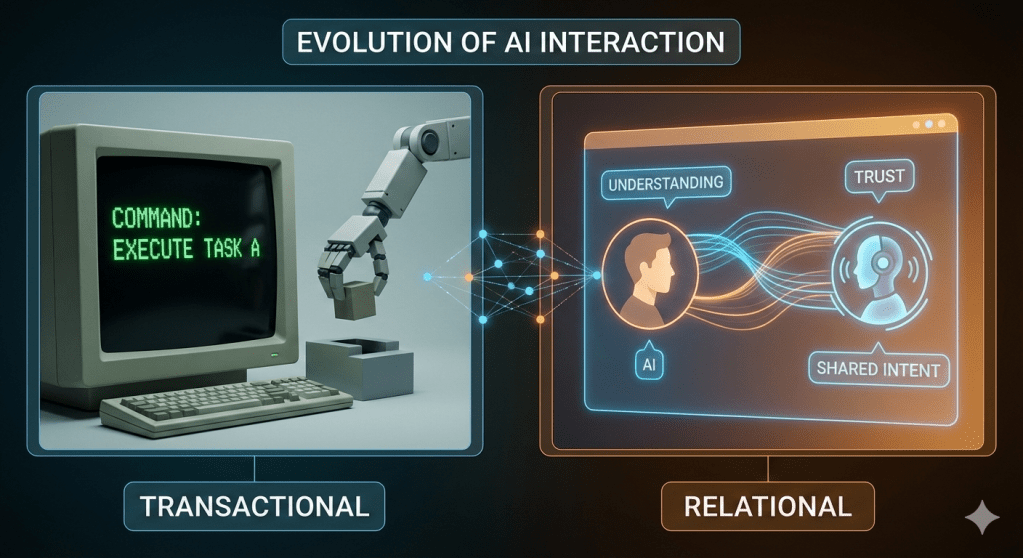
Over the years, I’ve come to see that useful AI needs more than accurate execution. It needs the ability to engage with humans over time, cope with uncertainty, and build shared understanding. This post reflects on why balancing transactional reliability with relational intelligence matters.
-
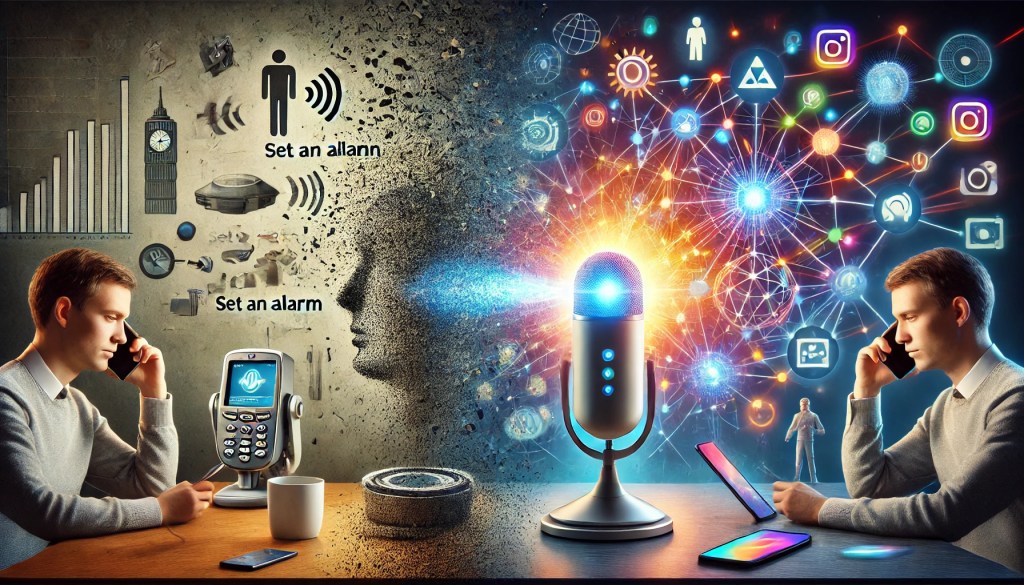
Although creating virtual assistants has long been a dream of the speech and natural language technology community—realized with the commercial launches of Siri, Google Assistant, and Alexa over a decade ago—these technologies have ultimately failed to achieve ubiquity or widespread adoption. The question is, why? In this blog post, I’ll explore the reasons behind this…
-

I started this blog about 12 years ago, just after publishing my first book The Voice in the Machine (I will publish a second book, AI Assistant, in 2021). The initial idea of this blog was to have a venue for my musings and ruminations on conversational AI. However I haven’t posted anything for a
-

This blog post appeared originally on Jibo Blog In 1922, the Elmwood Button Co. commercialized a toy that could respond to voice commands. The toy, called Radio Rex, was a dog made of celluloid that would leap out of its house when you called its name: “Rex!” That was two decades before the first digital
-

This is a re-posting of my editorial on the latest ICSI’s Newsletter. W. Brian Arthur, in his book The Nature of Technology: What It Is and How It Evolves, describes the evolution of technology as a combinatorial process. Each new technology consists in a combination of existing technologies that “beget further technologies.” Moreover, each technology
-
When astronaut Dave Bowman tries to go back to the mothership, HAL refuses to open the pod bay door with the calm and categorical “I am sorry Dave, I am afraid I can’t do that” famous line in one of the most dramatic scenes of the movie 2001 a Space Odyssey. Now, imagine HAL was actually built
-
I really appreciate when people try to give a simplified view of technology with the goal to let the general public understand what’s behind the hood, and how complex is, oftentimes, to make things works properly. That is the goal I had in mind when I embarked on the project of writing The Voice in the Machine. However, I believe,
-
If I had to chose one of the areas of human-machine natural communication where we haven’t ben able to make any significant stride during the past decades, I would choose “general” language understanding. Don’t get me wrong. Language understanding per se has made huge steps ahead. IBM Watson‘s victory over Jeopardy! human champions is a testimony of
-
There is a lot of talking about the performance of Apple’s Siri. An article appeared on the New York Times a few days ago brutally destroying Siri from the point of view of its performance, and others compare it with Google Voice Search. As a professional in the field, having followed Google Voice Search closely, knowing well the people who work
-
Building a computer that speaks with the same naturalness and intelligibility of humans is not a much easier task than building a computer that understand speech. In fact it took decades to reach the quality of modern speech synthesizer, and yet the superiority of real human voice is still unbeatable. Still today, whenever possible, automated spoken dialog systems on the phone
-
Subscribe
Subscribed
Already have a WordPress.com account? Log in now.
 THE VOICE IN THE MACHINE